
9 Warning Signs You Need Roof Repair Right Away
Your roof is your home's first line of defense against rain, wind, snow, and other harsh weather conditions. While a properly maintained roof can provide reliable protection for many years, even minor roofing problems can develop into costly damage when left unaddressed.
Unfortunately, many homeowners don't realize their roofs need attention until they discover water stains on their ceilings, missing shingles, or a significant leak. However, the signs you need roof repair often appear long before a major roofing emergency occurs.
Recognizing these warning signs early can help protect your home's structural integrity, prevent moisture damage, and potentially extend the lifespan of your roofing system.
At Paquette Roofing, we provide professional roof inspections and residential roof repair services throughout central and eastern Connecticut. Whether you're dealing with storm damage, deteriorating shingles, or a suspected roof leak, our experienced roofing professionals can help identify the problem and recommend the right solution.
Here are nine warning signs that your roof may need immediate attention.
1. Water Stains or Leaks Inside Your Home
One of the clearest signs you need roof repair is water entering your home. While an active leak is an obvious problem, roof leaks don't always involve water dripping from the ceiling.
Early warning signs of roof leaks may include:
- Brown or yellow water stains on ceilings or walls
- Peeling paint or bubbling drywall
- Damp insulation in the attic
- Musty odors in upper-level rooms
- Water dripping during heavy rain
- Moisture around chimneys, skylights, or attic vents
Water can travel along rafters and other building materials before becoming visible inside your home. As a result, the location of an interior water stain may not correspond directly to the source of the roof leak.
Even a small leak can eventually damage insulation, drywall, and roof decking. Prolonged moisture exposure may also contribute to mold growth.
When to act: Contact a roofing professional promptly if you notice new water stains, recurring moisture, or active leaks. Early repairs can help prevent additional interior damage.
2. Missing, Curling, or Cracked Roof Shingles
Asphalt shingles provide an essential protective barrier against the elements. When shingles become damaged or go missing, the underlying roofing materials may be exposed to moisture and weather-related deterioration.
Common signs of shingle damage include:
- Missing shingles that leave visible gaps
- Shingles curling upward along their edges
- Cracked, split, or broken shingles
- Shingles that appear lifted or loose
- Buckling or uneven areas of roofing material
- Shingle fragments scattered around your yard
These problems may develop because of aging materials, improper installation, prolonged sun exposure, or severe weather.
In Connecticut, strong winds and winter weather can place additional stress on asphalt roofing systems. Even a few missing shingles may create vulnerable areas where water can penetrate the roof.
When to act: Schedule a professional inspection when you notice damaged or missing shingles. Depending on the extent of the damage and the condition of the surrounding materials, targeted repairs may be sufficient.
3. Excessive Asphalt Shingle Granules in Your Gutters
Have you noticed sand-like particles accumulating in your gutters or around your downspouts? These particles may be protective granules from your asphalt shingles.
Granules help shield shingles from ultraviolet radiation and everyday weather exposure. As shingles age, they can gradually lose some of this protective material.
Although a small amount of granule shedding is normal, particularly with newly installed shingles, excessive granule loss may indicate that your roof is deteriorating.
Watch for:
- Large accumulations of granules in gutters
- Dark or uneven patches on roof shingles
- Bare areas where the underlying asphalt is exposed
- Granule loss accompanied by curling or cracking shingles
If your roof is older and you're noticing significant granule loss, a professional inspection can help determine whether repairs are appropriate or the shingles are approaching the end of their useful life.
When to act: Arrange an inspection if granule loss appears excessive, continues over time, or occurs alongside other signs of roofing deterioration.
4. A Sagging or Uneven Roofline
A sagging roofline is one of the more serious warning signs of potential roofing problems.
Your roof should generally maintain the shape intended by its structural design. If you notice an area that appears to dip, sag, or develop an unusual curve, it may indicate an underlying structural issue.
Possible causes include:
- Water-damaged roof decking
- Deteriorating structural supports
- Excessive loads on weakened roofing components
- Long-term moisture intrusion
- Construction or structural deficiencies
In some cases, significant snow accumulation can place additional stress on an already weakened roof.
Unlike minor cosmetic roofing issues, structural problems may pose an immediate safety concern.
When to act: Seek urgent professional evaluation if your roofline appears to be sagging. Avoid walking on the roof or entering areas that may be structurally unsafe.
5. Moss, Mold, or Algae Growth on Your Roof
Dark streaks, green patches, and other visible growth on your roofing materials may indicate that your roof needs attention.
However, not all organic growth presents the same level of concern.
Algae: Dark streaks on asphalt shingles are often caused by algae. These stains are frequently cosmetic and do not necessarily indicate that roof repairs are needed.
Moss: Thick moss growth can retain moisture against roofing materials. Over time, significant buildup may contribute to shingle deterioration, particularly in shaded areas.
Mold: Mold inside an attic or on roof decking may indicate excessive moisture caused by roof leaks, condensation, or inadequate ventilation.
Connecticut's humid summers, shaded properties, and seasonal precipitation can create conditions that encourage moss and algae growth.
If you notice extensive moss buildup or suspect moisture damage beneath your roof, a professional evaluation can help determine whether cleaning, ventilation improvements, or roofing repairs are necessary.
When to act: Schedule an inspection if moss is lifting shingles, roofing materials appear damaged, or organic growth is accompanied by interior moisture problems.
6. Damaged or Loose Roof Flashing
Roof flashing is the metal material installed around vulnerable areas where different roofing components meet. It helps direct water away from openings and transitions in the roofing system.
Flashing is commonly found around:
- Chimneys
- Skylights
- Plumbing vents
- Roof valleys
- Roof-to-wall intersections
- Other roof penetrations
When flashing becomes loose, corroded, improperly sealed, or damaged, water may find its way beneath the surrounding roofing materials.
Signs of flashing problems may include visible gaps, displaced metal, rust, deteriorated sealant, or water stains near chimneys and skylights.
Because flashing protects some of the roof's most leak-prone areas, even relatively small defects can lead to moisture intrusion.
When to act: Contact a roofing contractor if you notice loose flashing or recurring leaks around roof penetrations. Professional flashing repairs may resolve the problem without requiring a full roof replacement.
7. Visible Roof Damage After a Storm
Connecticut experiences thunderstorms, strong winds, heavy rainfall, snowstorms, and other weather events that can damage residential roofs.
Some storm-related roofing problems are immediately obvious, while others may go unnoticed until the next period of heavy rain.
After severe weather, look for these warning signs from a safe location:
- Missing or lifted shingles
- Fallen branches resting on the roof
- Roofing debris scattered around your property
- Damaged gutters or downspouts
- Loose or displaced flashing
- New ceiling stains or attic moisture
- Visible impact damage from falling limbs
High winds can loosen shingles and compromise their ability to shed water. Falling branches may damage roofing materials or the underlying roof structure.
If your home has experienced a significant storm, scheduling a professional inspection can help identify damage that isn't easily visible from the ground.
When to act: Arrange an inspection promptly after discovering storm-related roof damage. If water is actively entering your home, ask about emergency roof repair services and temporary protection options.
8. Unexplained Increases in Energy Bills
Although rising energy costs don't automatically indicate roof damage, they may sometimes be associated with problems involving attic insulation, ventilation, or air leakage.
Your roofing and attic systems work together to help maintain comfortable indoor temperatures.
If moisture enters the attic and damages insulation, the insulation may become less effective. Poor attic ventilation or gaps that allow conditioned air to escape can also contribute to heating and cooling inefficiencies.
Potential warning signs include:
- Unexpected changes in heating or cooling costs
- Noticeable temperature differences between rooms
- Damp or compressed attic insulation
- Excessive attic heat during summer
- Ice dam problems during winter
Keep in mind that energy costs can increase for many reasons, including utility rate changes, weather conditions, and HVAC performance.
When to act: If higher energy bills occur alongside moisture problems, visible roof damage, or attic ventilation concerns, consider having your roofing and attic systems evaluated.
9. Daylight or Moisture Visible in Your Attic
Your attic can provide important clues about the condition of your roof, even when no problems are visible inside your living space.
During a safe visual inspection from an accessible attic area, look for:
- Daylight shining through unexpected openings in the roof decking
- Dark water stains on rafters or decking
- Damp or discolored insulation
- Water droplets on wooden surfaces
- Mold-like growth or persistent musty odors
- Signs of deteriorating roof decking
Not every visible opening indicates roof damage. Some openings are intentionally designed for ventilation, and condensation may develop because of indoor humidity rather than an exterior leak.
However, unexpected daylight, recurring moisture, and stained roof decking should be evaluated.
When to act: Schedule a professional roof inspection if you discover unexplained openings, damp insulation, or evidence of water intrusion.
Roof Damage Warning Signs: How Quickly Should You Act?
Some roofing problems require urgent attention, while others can be evaluated during a scheduled inspection. The following chart can help you determine the appropriate next step.
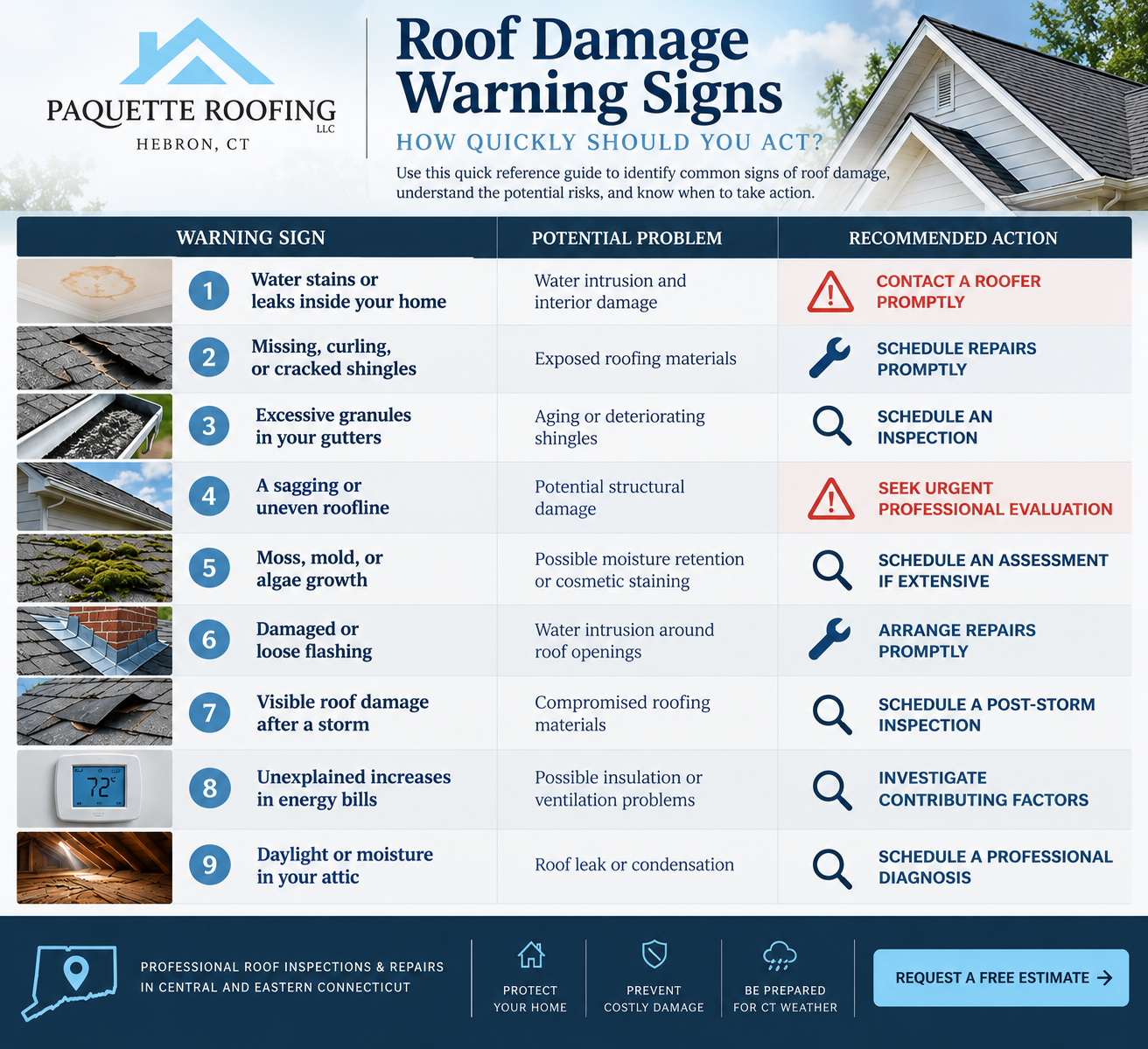
Important: If you suspect structural instability, avoid the affected area. If roof damage creates an immediate safety hazard, contact emergency services.
What Causes Roof Damage in Connecticut?
Homeowners in central and eastern Connecticut experience changing weather conditions that can affect roofing systems throughout the year.
Understanding these seasonal challenges can help you recognize when roof maintenance or repairs may be necessary.
Winter Snow and Ice Dams
During Connecticut winters, snow can accumulate on rooftops. When heat escaping from a home causes snow to melt and refreeze near the roof edges, ice dams may form.
These ice barriers can prevent melting snow from draining properly, allowing water to back up beneath shingles.
Proper insulation, air sealing, ventilation, and roofing maintenance can help reduce the risk of ice dam-related damage.
Strong Winds and Summer Thunderstorms
Wind-driven rain and powerful gusts can lift shingles, loosen flashing, and expose vulnerable areas of the roof.
After a significant storm, inspect your property from the ground for missing shingles, fallen branches, or other visible damage.
Heavy Rainfall and Moisture Exposure
Prolonged rainfall can reveal existing weaknesses in roofing materials, especially around chimneys, skylights, vents, and roof valleys.
Even small flashing defects or deteriorated shingles may allow water to enter the roofing system.
Falling Branches and Tree Debris
Homes surrounded by mature trees may be particularly vulnerable to roof damage from falling branches.
Branches can puncture shingles, damage gutters, or compromise underlying roof decking.
Routine tree maintenance and professional roof inspections can help identify potential concerns before they become more serious.
What Should You Do If You Suspect Roof Damage?
If you've noticed one or more warning signs, taking the right steps can help limit additional damage.
1. Document the problem. Take photographs of visible damage, interior water stains, or roofing debris from a safe location.
2. Protect your belongings. If water is entering your home, move furniture, electronics, and valuables away from the affected area when safe to do so.
3. Avoid climbing onto your roof. Wet, damaged, or unstable roofing materials can create serious fall hazards. Leave rooftop inspections to trained professionals.
4. Look for additional warning signs. Check accessible interior areas for damp insulation, ceiling stains, or other evidence of moisture intrusion.
5. Schedule a professional inspection. A qualified roofing contractor can identify the source of the damage and recommend appropriate repairs.
Paquette Roofing provides professional roof repair services in central and eastern Connecticut, including leak detection, shingle repairs, flashing repairs, and storm damage restoration.
Does Your Roof Need Repairs or a Full Replacement?
Discovering roof damage doesn't necessarily mean you need to replace your entire roofing system.
In many cases, localized problems can be addressed with targeted repairs. However, extensive deterioration or recurring roofing problems may make replacement the more practical long-term investment.
When Roof Repairs May Be Enough
Professional roof repairs may be appropriate when:
- Damage is limited to a relatively small area.
- Only a few shingles are missing or damaged.
- A leak originates from a localized flashing problem.
- Most of the roofing materials remain in good condition.
- The roof still has a reasonable amount of expected service life.
Addressing these issues promptly can help extend your roof's lifespan and protect your home without the expense of a complete replacement.
When Roof Replacement May Be the Better Option
A roof replacement may be worth considering when:
- Shingles are deteriorating across large sections of the roof.
- Multiple leaks continue to develop.
- The roofing system is approaching the end of its expected lifespan.
- Significant moisture damage affects large areas of roof decking.
- The cost of repeated repairs is becoming substantial.
The age of your roof is an important consideration, but it shouldn't be the only factor in your decision.
A professional roof inspection can help determine whether repairs will provide reliable protection or whether replacement would offer better long-term value.
Frequently Asked Questions About Roof Repairs
How Do I Know If My Roof Needs Immediate Repairs?
Common signs that your roof needs immediate attention include active leaks, missing shingles, damaged flashing, sagging roof sections, and water stains on interior ceilings. If you notice these problems, contact a roofing professional to evaluate the damage and determine the appropriate repairs.
Can a Roof Leak Be Repaired Without Replacing the Entire Roof?
Yes. Many roof leaks can be repaired without replacing the entire roof. If the problem is limited to damaged shingles, deteriorated flashing, or another localized issue, targeted repairs may be sufficient. However, widespread damage or recurring leaks may indicate that roof replacement is necessary.
How Long Can I Wait to Repair a Leaking Roof?
A leaking roof should be evaluated as soon as possible. Even a small leak can cause damage to insulation, drywall, and roof decking if moisture continues to enter your home. Prompt attention can help minimize additional damage and repair costs.
What Are the Signs of Roof Damage After a Storm?
Common signs of storm damage include missing or lifted shingles, fallen branches, damaged gutters, loose flashing, and new interior water stains. Some damage may not be visible from the ground, so a professional inspection can be helpful after severe weather.
Can Missing Shingles Cause a Roof Leak?
Yes. Missing shingles expose underlying roofing materials to rain, wind, and moisture. Although roof underlayment may provide temporary protection, the exposed area can become vulnerable to water intrusion and further deterioration.
How Often Should Connecticut Homeowners Have Their Roofs Inspected?
An annual roof inspection can be a useful preventive maintenance practice, particularly for older roofing systems. Homeowners should also consider inspections after severe storms or when they notice signs of damage. A roofing professional can recommend an appropriate inspection schedule based on the roof's age, materials, and condition.
Don't Ignore the Warning Signs of Roof Damage
Small roofing problems can quickly become expensive repairs when left unaddressed. Whether you've noticed missing shingles, interior water stains, damaged flashing, or signs of storm damage, identifying the source of the problem early can help protect your home.
Since 2004, Paquette Roofing has helped homeowners throughout central and eastern Connecticut maintain, repair, and replace their roofing systems. Based in Hebron, CT, our experienced team provides thorough roof inspections, straightforward recommendations, and dependable roofing solutions.
We understand the challenges Connecticut weather can present and work to help homeowners make informed decisions about protecting their properties.
Concerned about your roof? Don't wait for minor damage to become a major problem.
Contact Paquette Roofing today to request a free roof repair estimate.